The History of Worship Music
Source
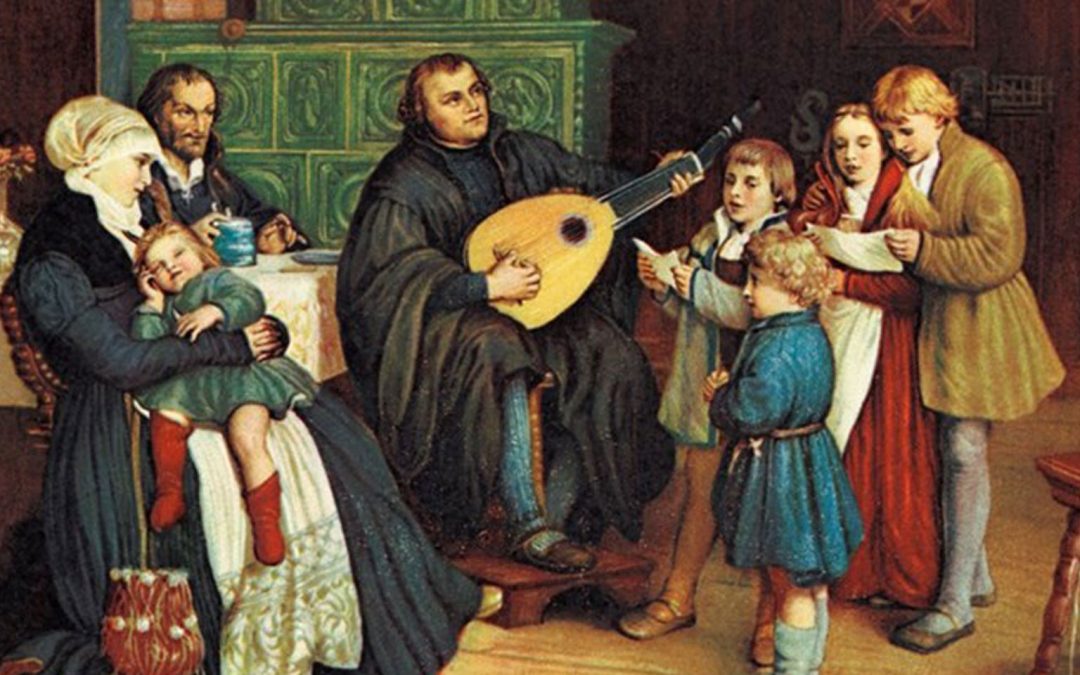
Throughout history, the Christian church has used music to praise God, to worship. By knowing the history of worship music, we will be better able to understand the extent of its power in the Christian faith. The following is a brief history of worship music.
Worship Music in the Old Testament
The first mention of worship in the Bible is in Genesis 22:5 - 'Then Abraham said to his young men, “Stay here with the donkey; I and the boy will go over there and worship and come again to you.” '
The first mention of music in the Bible is in Genesis 4:21 - 'His brother’s name was Jubal; he was the father of all those who play the lyre and pipe. '
The first mention of worship in musical form in the Bible is in Exodus 15:21 - 'And Miriam sang to them: “Sing to the Lord , for he has triumphed gloriously; the horse and his rider he has thrown into the sea.” '
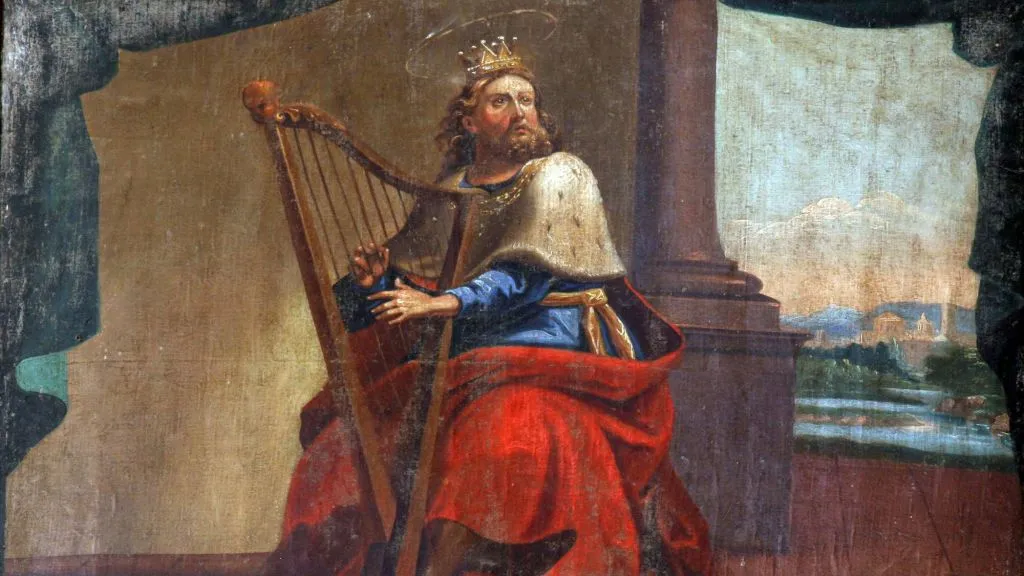
During the Old Testament, the Psalms and other songs were sung as worship and praise in the temple. Some professional musicians and singers led these songs of worship. David, the author of the Psalms, wrote this entire book as a source of song, and he was a great musician. These Psalms were written by him as a form of worship, and when he was king of Israel, he allowed the Levites to use all kinds of instruments in worship.
As the Old Testament concluded, the songs of praise that had become prominent slowly dwindled. The close of the Old Testament is marked by idolatry and unbelief, and this became evident in their singing. The songs that had been sung previously by Moses, Miriam, Deborah, David, Asaph, Chenaniah, and Solomon were no longer around. Musical instruments were rarely used in synagogue worship, and religious music was formal and mournful. Eventually, music in the synagogue became limited to ritualistic chants of the priests.
Source
Worship Music in the New Testament
In the New Testament, Jesus’s ministry shows singing. In Mark 14:26, the Bible says,' And when they had sung a hymn, they went out to the Mount of Olives. '
Then, after Jesus’s death and resurrection, it is recorded in Acts 16:25 that ' About midnight Paul and Silas were praying and singing hymns to God, and the prisoners were listening to them, '
And in several of Paul’s letters, he mentioned music:
- 1 Corinthians 14:15 - 'What am I to do? I will pray with my spirit, but I will pray with my mind also; I will sing praise with my spirit, but I will sing with my mind also. '
- Ephesians 5:19 - 'addressing one another in psalms and hymns and spiritual songs, singing and making melody to the Lord with your heart, '
- Colossians 3:16 - 'Let the word of Christ dwell in you richly, teaching and admonishing one another in all wisdom, singing psalms and hymns and spiritual songs, with thankfulness in your hearts to God. '
So, there is lot of evidence that the early Christian church used well-known worship hymns.
 Source
Worship Music in the Middle Ages
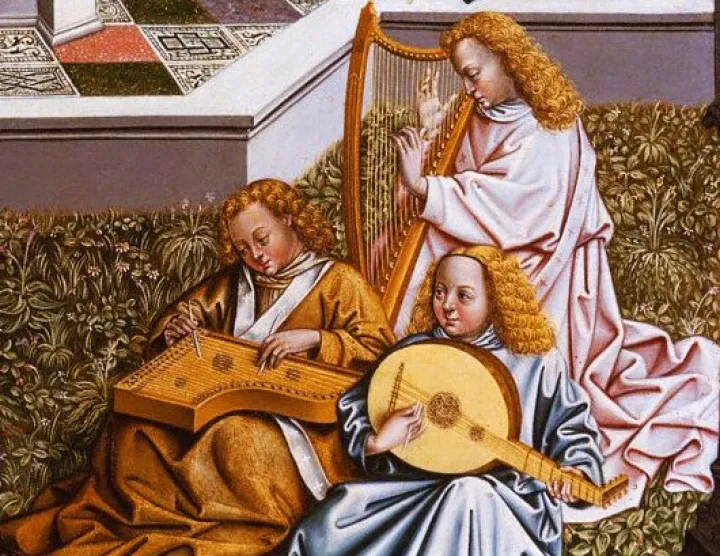
In the Middle Ages, music became a primary source of worship. The Medieval church formed songs still used today:
- “Jesus, the Very Thought of Thee”
- “O Sacred Head, Now Wounded”
- “O Come, O Come, Emmanuel
But the freedom of corporate singing in the church was short-lived.
 Source
Worship Music in the Protestant Reformation
The singing of hymns by the laity in the church was banned by the turn of the fifteenth century. But one of the largest accomplishments of Protestant Reformers was the restoration of congregational music. The earliest protestant hymnbooks were published by the Bohemian Brethren in 1501 and 1505.
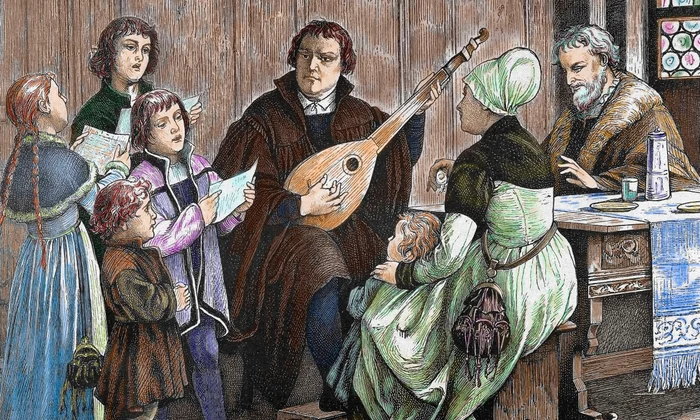
Martin Luther loved music and became a revolutionary influence on worship music. He composed music that was marked by simple melody, strong harmony, and stately rhythm.
John Calvin also contributed to the restoration of music in the church through his preference of Psalms over hymns. He said that hymns were artificially manufactured by people while the Psalms were inspired by God. He was also against the use of instruments in music and advocated singing in unison instead of in parts, as Luther did. At first, Calvin said that accompanying instruments was worldly, but later changed his mind.
 Source
Worship Music in The American Colonies
In the American colonies, it can be seen that music in this area and time was centered around the Psalm singing of the Calvinists in Europe, as formed during the Protestant Reformation.
 Source
Worship Music in The Modern Era
Through the mid-1900s to now, worship music as a recognized genre of music in the U.S. has grown. The distinct genre of music recongived as “Contemporary Worship Music (aka Praise and Worship Music) is now a big part of the modern Christian church. These songs seem not to follow a specific outline, except for the fact that they take full advantage of the technology and production available to them through our modern day. Most worship music in today’s age is centered around Biblical truths and theology, and is not based on strict formats or ideas. In recent years, worship music bands and artists have become a big thing, even going on tours across America and the world, with some selling out arenas. Other types of Christian music have also evolved through this, such as Christian rap, Christian pop, Christian alternative, Christian country, etc.
 Source